
Most of the Apostles’ Creed lifts our gaze to heaven.
We proclaim belief in God the Father Almighty, in Jesus Christ His only Son, in the Holy Spirit, the resurrection of the dead, and the life everlasting. We’ve climbed a theological mountain—and then, suddenly, the Creed shifts our focus.
It gets horizontal.
“I believe in the holy catholic church, the communion of saints.”
This single line—so often misunderstood or skipped over—confronts one of the most dangerous misconceptions in modern Christianity: the idea that faith is a solo journey.
What Does “Catholic” Really Mean?
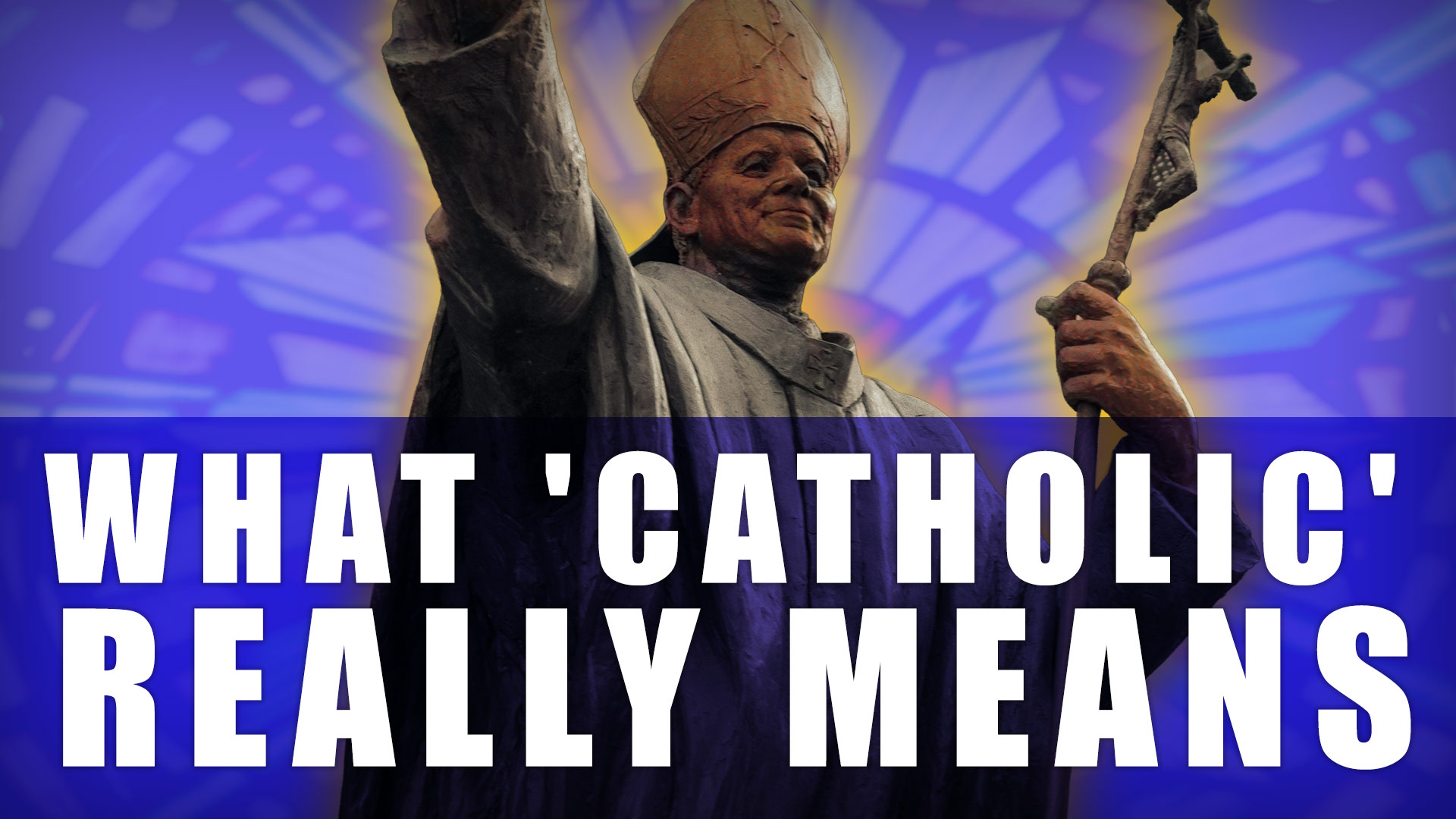
First, let’s clear up the confusion: “catholic” here doesn’t mean Roman Catholic. It comes from the Greek katholikos, meaning “universal” or “according to the whole.”
In the earliest centuries of the Church, “catholic” meant the global body of believers united under Christ, not divided by denominations, politics, or geography.
To say, “I believe in the holy catholic church” is to say:
- The Church is universal – transcending location, culture, and time.
- The Church is holy – not perfect, but set apart by God for His purposes.
- The Church is unified – not identical, but joined in one faith, one Spirit, and one mission.
This is about identity, not hierarchy. It’s not about a building or brand. It’s about belonging to a global, God-ordained community.
The Communion of Saints Is a Real Family
The phrase “the communion of saints” takes the concept of Church even deeper.
“Communion” means participation—shared life. And “saints” are not spiritual superstars, but everyday believers made holy by Jesus. This communion spans time and geography:
- The saints who came before us, whose legacy we inherit.
- The saints beside us, who walk with us daily.
- The saints who will come after us, who will carry the torch forward.
In a culture of isolation, this is a countercultural truth: Christianity is personal—but never private.
Why Community Isn’t Optional
The early church in Acts 2 lived this out. They gathered often. They shared meals, resources, and burdens. When trials came, they didn’t scatter—they drew even closer together.
Compare that to today’s Western model of faith: hyper-individualistic, overly private, often disconnected.
But Scripture gives us a different blueprint. There are nearly 60 “one another” commands in the New Testament—calls to love, encourage, serve, forgive, confess, and carry one another. These can’t be obeyed from a distance.
As Matt Chandler says, “Christ distributes courage through community and dissipates doubts through fellowship.”
So How Do We Live This Out?
If you believe in the holy catholic church and the communion of saints, your life should reflect it:
- Join a Local Church. Not casually—committedly. Belong, don’t just attend.
- Build Real Relationships. Invite people into your rhythms. Show up consistently.
- Be Accountable. Let trusted people speak into your life.
- Celebrate the Global Church. Pray, give, and rejoice in what God is doing worldwide.
- Practice the “One Anothers.” Don’t wait for someone else to go first. Be the one who loves radically.
The Church Is Messy—and Beautiful
Yes, the Church is flawed. Yes, it’s full of broken people. But it is also the Bride of Christ. The body of Christ. The family of God.
And here’s the miracle: you belong.
Not because of what you’ve done—but because of what Christ has done. He bought you with His blood. He placed you in a family.
So let’s stop treating church like a weekend hobby and start treating it like our spiritual home.